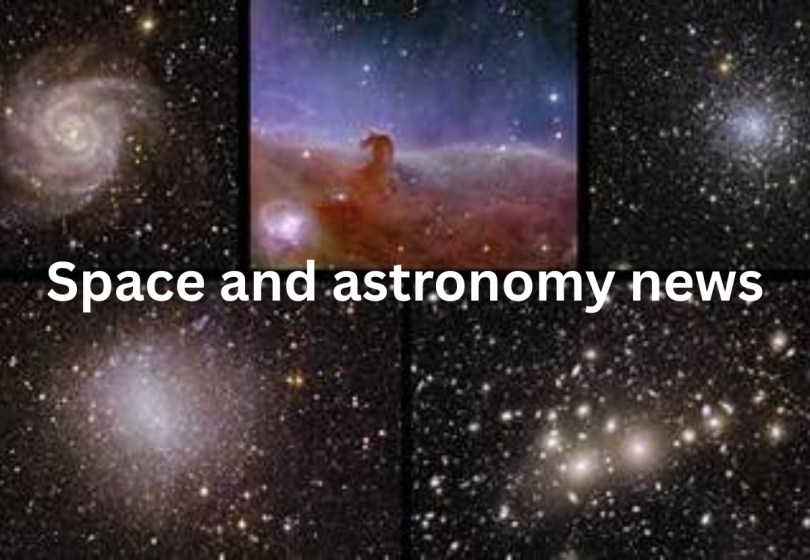

Have you ever stared up at the night sky and felt amazed by the vastness above? Every day, space and astronomy news brings us closer to understanding the mysteries of the cosmos—from distant galaxies and black holes to new planets and exciting space missions.
In 2025, the universe is more alive than ever with discoveries and advancements that capture the imagination of millions worldwide. Let’s dive deeper into what’s happening beyond Earth’s atmosphere and why it matters to all of us.
Latest Highlights in Space and Astronomy News
1. James Webb Space Telescope: Peering Deeper Than Ever
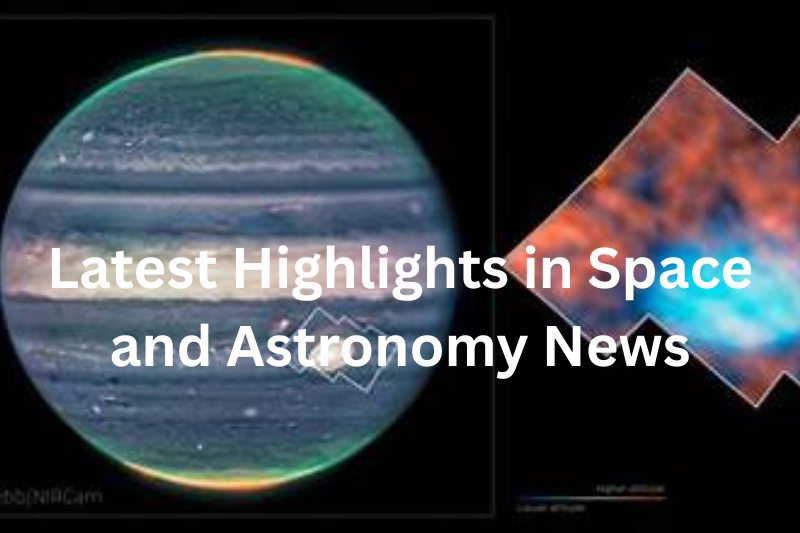
Since its launch, the James Webb Space Telescope (JWST) has revolutionized our view of the universe. In 2025, JWST captured detailed images of star-forming regions, giving scientists unprecedented insight into how stars and planets are born. For example, it revealed swirling clouds of gas and dust where new planets are beginning to take shape around young stars, something we couldn’t see with older telescopes.
This powerful telescope observes in infrared light, allowing it to see through cosmic dust and uncover hidden details in distant galaxies, some dating back billions of years—close to the beginning of time itself.
2. ISRO’s Shukrayaan-1 Mission to Venus
India’s space agency ISRO is preparing to launch Shukrayaan-1, a mission aimed at studying Venus, Earth’s “sister planet.” Venus has a thick, toxic atmosphere and extreme surface temperatures, but scientists believe studying it will help understand climate change and volcanic activity—both on Venus and Earth.
This mission will include orbiters and sensors to analyze Venus’s atmosphere, searching for signs of volcanic activity and even clues about whether the planet might have supported life long ago. Launching in late 2025, it’s a significant step for India’s growing presence in space exploration.
3. Commercial Space Travel Takes Giant Leaps
Space isn’t just for government agencies anymore. Private companies like SpaceX, Blue Origin, and Rocket Lab are leading the charge for space tourism and commercial satellite launches. In 2025, SpaceX’s Starship completed its first mission carrying a civilian crew around the Moon—a milestone that brings space tourism closer to reality.
This progress shows how space travel is becoming more accessible, though it’s still quite expensive and limited to a select few. But with advances happening quickly, the dream of ordinary people experiencing space travel may become common in the next few decades.
4. New Earth-Like Exoplanets Discovered
One of the most thrilling parts of astronomy is the hunt for planets beyond our solar system—called exoplanets. In 2025, astronomers announced the discovery of TOI-715 b, an exoplanet located in its star’s “habitable zone,” where temperatures might allow liquid water to exist—a key ingredient for life.
This discovery, made using NASA’s TESS telescope, adds to the growing list of planets that could potentially support life, intensifying questions about whether we are alone in the universe.
5. China’s Lunar Base Plans
China is advancing its ambitious plan to build a lunar base on the Moon by the 2030s. In 2025, China successfully landed a new robotic rover on the Moon to collect soil samples and test materials for future habitats.
Establishing a moon base would allow humans to live and work on the Moon long-term, serving as a stepping stone for deeper space exploration, such as missions to Mars.
The Benefits of Keeping Up with Space and Astronomy News
1. Expanding Human Knowledge
Every discovery in space helps answer fundamental questions about where we come from and how the universe works. Learning about stars, planets, and cosmic events deepens our understanding of physics, chemistry, and biology in ways that benefit all science.
2. Technological Innovation
Many technologies developed for space travel and research have practical uses on Earth. For example, satellites support GPS navigation, weather forecasting, and global communications. Imaging technology from telescopes contributes to advances in medical devices and cameras.
3. Inspiration and Education
Space exploration inspires people—especially young students—to pursue science, technology, engineering, and math (STEM) fields. It motivates creativity, critical thinking, and curiosity about the universe.
4. International Cooperation
Space missions often bring countries together, fostering peaceful cooperation on a global scale. The International Space Station (ISS) is a prime example where multiple nations collaborate for science and research.
5. Economic Growth
The emerging space economy is creating new industries and jobs—everything from satellite manufacturing to space tourism. This growth could open up new markets and innovation hubs worldwide.
You may also like to read these posts:
Tech Gadget Reviews – A Friendly, Honest Guide Before You Buy
Software and App News: Stay Updated with the Digital World
🔐 Cybersecurity Trends: A Deep Dive into 2025 and Beyond
Healthy Living Tips: A Complete Guide to a Better You
Drawbacks and Challenges in Space and Astronomy News
1. High Costs and Resource Allocation
Space missions can be extremely expensive, often costing billions of dollars. Critics argue these funds could be better spent solving urgent problems on Earth, like poverty, climate change, or healthcare. Balancing space investment with earthly needs remains a big debate.
2. Space Debris and Environmental Risks
With more satellites launched every year, space debris is becoming a serious concern. These fragments travel at high speeds and could damage spacecraft or satellites, threatening future missions. Also, the environmental impact of rocket launches, like pollution and fuel use, is under scrutiny.
3. Unequal Access
Currently, space travel and benefits mainly go to wealthy nations and individuals. This inequality might widen if space resources or tourism become exclusive to the rich, raising ethical concerns about who controls and benefits from space.
4. Potential Ethical Issues
Mining asteroids or planets for resources raises questions about the protection of extraterrestrial environments. There’s also concern about contaminating other worlds with Earth microbes, possibly harming any native ecosystems or future scientific studies.
5. Unpredictable Risks
Space exploration is inherently risky. Failures, accidents, or unexpected dangers can cause loss of life and resources. Human spaceflight requires careful planning and safety measures, which increase complexity and costs.
Final Thoughts
Space and astronomy news is more than just cool facts about stars and planets—it’s a window into the future of humanity. Every new mission and discovery teaches us something important about our place in the cosmos and pushes the limits of what we can achieve.
While there are challenges and debates about costs and ethics, the excitement and potential benefits make space exploration a thrilling adventure to follow. So next time you look up at the stars, remember: the universe is vast, full of mysteries.
FAQs
Q1: What is space and astronomy news?
A: Space and astronomy news covers the latest discoveries, missions, research, and developments related to outer space, planets, stars, galaxies, and cosmic phenomena.
Q2: Why is space exploration important?
A: Space exploration helps us understand the universe, develop new technologies, inspire innovation, and could one day provide solutions for life beyond Earth.
Q3: How do telescopes like the James Webb Space Telescope work?
A: Telescopes like JWST detect infrared light, which allows them to see through cosmic dust and observe distant stars, galaxies, and planets that are otherwise hidden from visible light telescopes.
Q4: What is the “habitable zone” in astronomy?
A: The habitable zone is the area around a star where conditions might be just right for liquid water to exist on a planet’s surface—making it possible for life as we know it.
Q5: Can humans live on the Moon or Mars?
A: Scientists are working on ways to build habitats and support human life on the Moon and Mars, but it requires solving challenges like radiation exposure, limited resources, and life support systems.